ServicesCommercial HVAC
Commercial HVAC in Ritzville
We repair, replace and service heating and cooling equipment for shops, offices, restaurants and other small commercial buildings. One person takes your call, sends the written quote, schedules around your business hours and walks the finished job with you.
Equipment that works longer days than a house system
Most small commercial buildings run packaged rooftop units, split systems or gas-fired unit heaters. They run long days with doors opening constantly, so contactors, run capacitors, blower belts and igniters wear faster than they would on a residential system. When one fails, you lose more than comfort: staff, customers and sometimes stock are affected.
Our approach is simple. The person who answers your call is the person who coordinates your job. They book the diagnostic, send the quote, order parts and tell you when the technician will be on the roof. If a part is delayed or the plan changes, you hear it from that same person.
Summer dust and harvest chaff load condenser coils quickly in this part of Washington. A packed coil pushes head pressure up until the compressor trips on its high-pressure switch, so regular coil cleaning prevents a lot of midsummer shutdowns.
What our commercial work covers
- 01
Rooftop unit diagnostics and repair
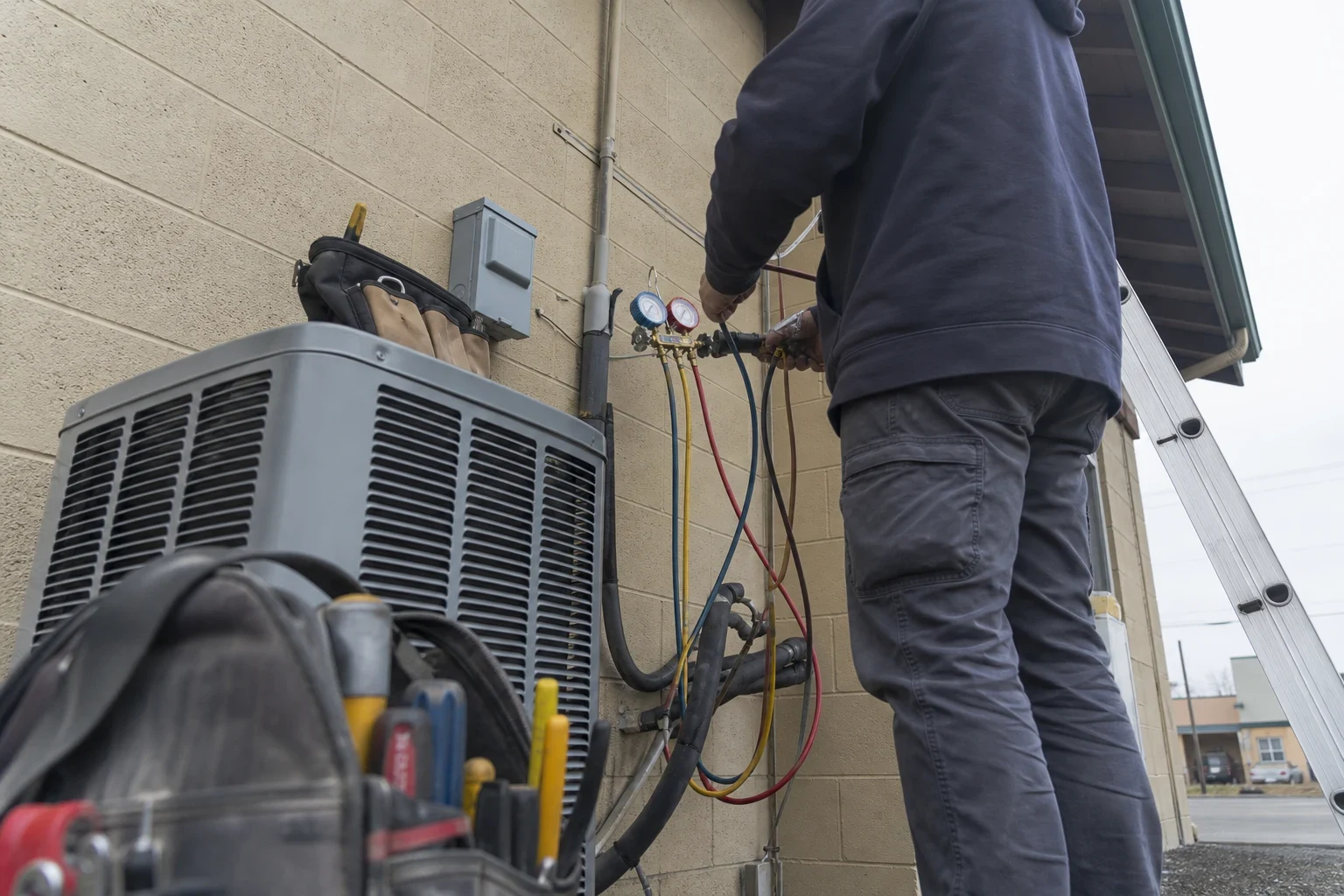
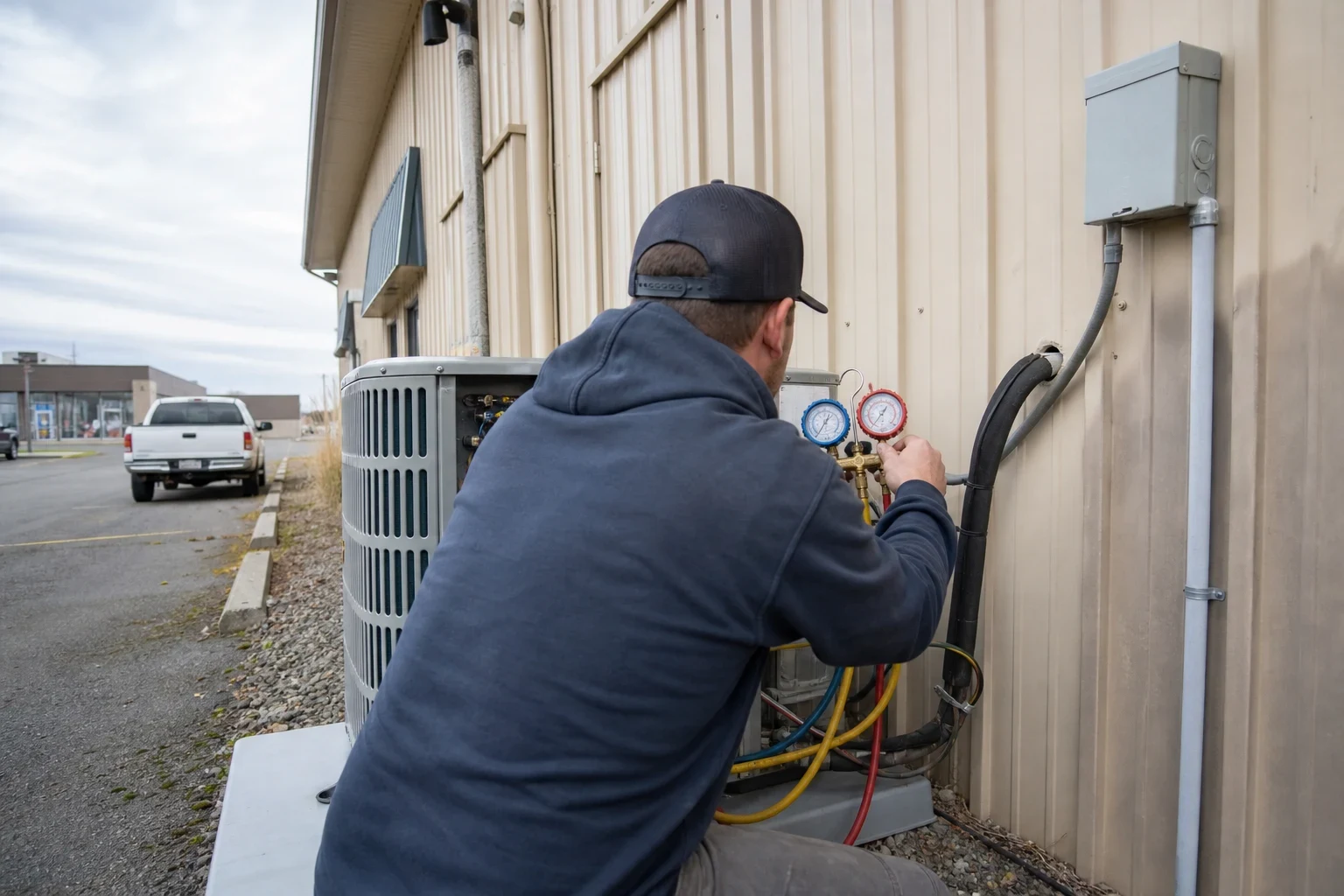
We test compressors, condenser fan motors, contactors, capacitors and pressure switches. Refrigerant charge is checked with gauges and line temperatures, not guessed. You get the reading and the cause along with the repair.
- 02
Gas heat sections and unit heaters
We service igniters, flame sensors, gas valves, inducer motors and high-limit switches on rooftop heat sections and the hanging unit heaters common in shops and warehouses. Every time we open a gas section, we inspect the heat exchanger for cracks and confirm the flue is drafting.
- 03
Economizers and controls
A stuck economizer damper can pull in full outside air in January or stay shut on a mild day when free cooling would help. We check actuators, mixed-air sensors and programmable thermostats so the unit follows the schedule your building actually keeps.
- 04
Equipment replacement
When a unit is past sensible repair, we size the new one to the space and its occupancy, arrange a crane or lift if the roof requires it and pull the mechanical permit. Estimates are free on installations and replacements.
- 05
Scheduled upkeep
Filter changes, belt inspection and tensioning, coil cleaning, condensate drain clearing and a full operating check. Our Maintenance Plans put this on a calendar so it happens before the hot and cold seasons arrive.
Questions about Commercial HVAC?
Call(509) 210-8386Signs your building's system needs a technician
One area never reaches setpoint
A back office stays warm while the sales floor is fine. That usually points to a weak compressor, low charge, a slipping blower belt or a unit undersized for how the space is now used.
Utility bills climbing without a reason
If your hours and occupancy haven't changed but your power or gas bill has, the equipment is working harder for the same result. Dirty coils and a stuck economizer are common causes.
Short cycling or tripped breakers
A unit that starts and stops every few minutes, or keeps tripping its breaker, is stressing the compressor. Pitted contactors, failing capacitors and pressure switch faults all show up this way.
Water on ceiling tiles
Stains below a rooftop unit or an air handler often mean a plugged condensate drain or a cracked drain pan. Caught early, it is a cleaning job instead of a ceiling repair.
Squealing, burning smells or a gas odor
A squeal at startup is usually a glazed or loose belt. A burning smell can be a seized motor. If you smell gas, shut the unit off at the disconnect, leave the area and call the gas utility before you call us.
How a commercial service call runs
- 1
One call, one coordinator
Tell us the equipment, the symptom and when your building is open. If you can read the make and model off the nameplate, that helps us bring the right parts. The same person schedules the visit and stays your contact through cleanup.
- 2
Diagnosis at the unit
The technician checks power and controls, refrigerant pressures, airflow and combustion on gas equipment. Should you approve the fix, whatever you paid for that diagnostic visit comes off the repair bill.
- 3
Written quote before work starts
You get a written quote before any work begins, broken out by parts, labor and any lift, crane or permit costs. If repair makes more sense than replacement, or the other way around, we explain why with the readings to back it up.
- 4
Work scheduled around your business
Where possible we work before you open or after you close. We protect the roof membrane around the unit and the floors inside, and keep walkways clear for your staff.
- 5
Walkthrough and cleanup
We run the system through a full heating or cooling cycle, show you the readings and haul away old parts, filters and packaging.
What moves the price of commercial work
Commercial jobs vary more than residential ones because the equipment, access and hours all differ from building to building. We price each job on what we find and put it in writing before we start. A unit that quits at night or on a weekend doesn't carry an emergency or after-hours fee.
- Equipment size and type
- A large rooftop unit with a gas heat section has more components to test and replace than a small split system. Tonnage and configuration drive both parts cost and labor time.
- Roof access and lifting
- A unit reachable by a fixed ladder is quicker to service than one that needs a lift. Replacements on taller buildings may need a crane, which is scheduled and priced separately.
- Age and refrigerant type
- Older units running R-22 use a phased-out refrigerant that is costly to recharge, and some of their parts are discontinued. That can tip a repair toward replacement.
- Condition of the surrounding connections
- A rusted roof curb, an undersized electrical disconnect or an outdated gas connection may need correcting before new equipment can go in safely.
- Permits and inspection
- Replacing commercial equipment generally requires a mechanical permit and inspection. We include those costs in the written quote so they don't surprise you later.
Commercial HVAC questions
Can you work outside our business hours?
Yes. Breakdowns get emergency repair around the clock, 24/7, and a visit at 2 a.m. or on a Sunday costs the same as a weekday one, with no surcharge for the hour. Planned repairs and replacements can usually be booked for early morning or after you close, so your staff and customers aren't working around us.
What kinds of buildings do you work on?
Mostly light commercial: offices, retail shops, restaurants, churches, and farm and equipment shops running rooftop units, split systems or gas unit heaters. If your building uses equipment we aren't set up to service, we will tell you on the first call.
Our rooftop unit still uses R-22. Should we repair it or replace it?
It depends on what failed. A bad capacitor or contactor on an otherwise sound unit is often worth fixing. A refrigerant leak or failed compressor on an R-22 unit usually is not, because the refrigerant is expensive and getting scarcer. We show you the numbers both ways in the written quote.
Do we have to sign a service contract?
No. We are glad to handle one-time repairs. If you want regular upkeep, our Maintenance Plans cover tune-ups, repair discounts and priority scheduling, which matters when several businesses lose cooling during the same heat wave.
Who do we talk to if something comes up after the job?
The same person who coordinated it. They have the readings, the parts list and the notes from your visit, so you don't have to explain the history to someone new.
Keep your building running for staff and customers
Tell us what your equipment is doing and when your building is open. One coordinator will set up the visit and send a written quote before any work starts.