ServicesDuctless Mini-Splits
Ductless Mini-Split Installation in Ritzville
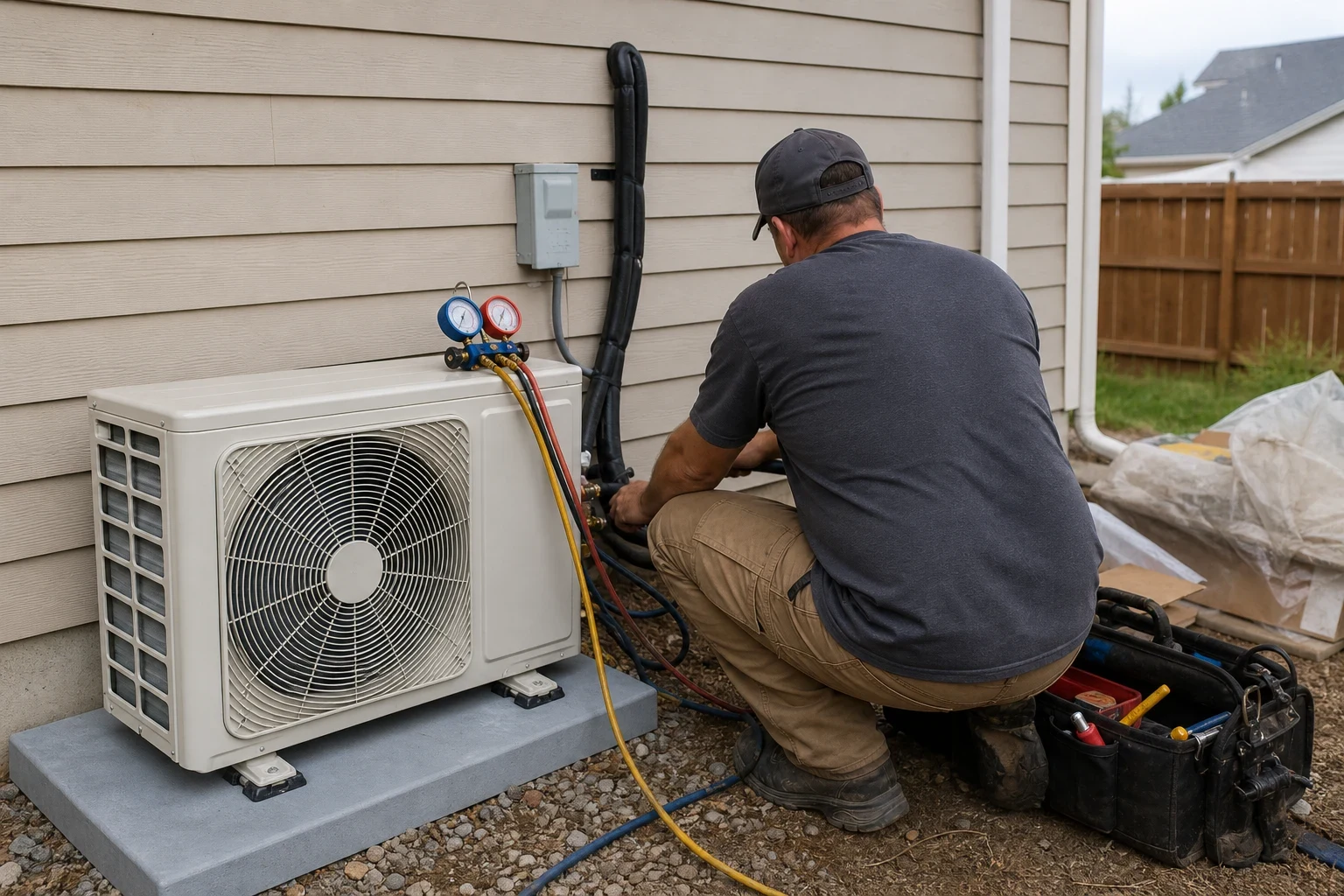
A ductless mini-split heats and cools a room through a small indoor head and an outdoor inverter unit, joined by a refrigerant line through a 3-inch hole. We size each zone, route the lines cleanly, and one person handles your job start to finish.
What a mini-split does and when it fits
A mini-split is a heat pump without ducts. The outdoor unit holds an inverter-driven compressor that speeds up and slows down to match the load, instead of cycling hard on and off. Each indoor head has its own fan, coil and thermostat, so the room it serves runs at its own temperature.
It is the right call when ducts are missing, undersized or not worth extending: an addition, a converted garage, a bonus room over the garage, or an older house heated with electric baseboard. It also works as a whole-home system with several heads on one outdoor unit.
From the first visit to the final walkthrough, the same person answers your questions and schedules the crew, so you are not repeating yourself to someone new at each step.
What the installation includes
- Room-by-room load calculation
- We measure each room, note window area, insulation and which way it faces, and run a heat-loss and heat-gain calculation. A head that is too big hits the setpoint in minutes and shuts off before it can pull moisture from the air, so the room feels damp. A head that is too small runs at full speed through the coldest weeks and still falls behind.
- Cold-climate equipment selection
- For homes that rely on the mini-split for winter heat, we recommend models rated to deliver useful heating capacity well below zero. We show you the manufacturer's capacity table at low outdoor temperatures, not just the nameplate rating.
- Line-set routing and wall penetration
- Insulated copper refrigerant lines, the condensate drain and the communication cable pass through one sleeved hole behind the head. Outside, we run them in a painted line-hide cover so the wall stays tidy and the insulation stays out of the sun.
- Outdoor unit placement
- The condenser goes on a stand or wall bracket that keeps it above drifting snow and lets defrost meltwater drain away. Blocked coils and refrozen meltwater are a common cause of winter shutdowns.
- Electrical work and permits
- Mini-splits need a dedicated circuit and an outdoor disconnect. We check panel capacity, pull the electrical permit where it is required, and schedule the inspection.
- Pressure test, evacuation and startup
- Flare joints are torqued to spec, the lines are pressure-tested with nitrogen, and the system is evacuated with a micron gauge before refrigerant is released. Moisture left in the lines breaks down oil and shortens compressor life.
Signs a mini-split makes sense for your home
One room never matches the rest
A bedroom over the garage or a sunroom that bakes in summer usually has too little supply air. A head in that room fixes it without rebalancing the whole house.
You are adding space without ducts
Extending ducts into a new addition is often impractical. A mini-split serves the new space directly and leaves your existing system alone.
Electric baseboard and window units
Resistance baseboard turns one unit of electricity into one unit of heat. A heat pump moves heat instead, so it typically uses much less power for the same warmth, and it cools in summer too.
An older house with no ducts
Homes built around boilers, wall heaters or wood stoves can get central-style comfort with a multi-zone system and no tearing into walls for duct runs.
High summer bills from window units
Window units leak air around the frame and block the view. A wall-mounted head is quieter and seals the opening completely.
How the job runs
- 1
Free in-home estimate
We walk each room, check the panel, and decide with you where heads and the outdoor unit should go. Estimates are free on installations and replacements.
- 2
Written quote
You get a written quote before any work begins, listing the equipment model, number of zones, line-set length and electrical work. Nothing gets added on install day without your approval.
- 3
Installation day
Most single-zone installs take one day; multi-zone systems often take two. We lay drop cloths, drill and sleeve the wall penetrations, mount the heads and outdoor unit, and run and seal the lines.
- 4
Startup and walkthrough
After evacuation and charging, we check temperatures at each head, confirm the condensate drains, and show you the remote, filter access and the heating and cooling modes. Then we clean up and haul off the packaging.
What moves the price of a mini-split
Two homes with the same square footage can price very differently depending on layout and electrical capacity. Your written quote breaks out each of these so you can see where the money goes.
- Number of zones
- Each indoor head adds equipment, a line set and labor. A multi-zone outdoor unit costs more than a single-zone one, but often less than several separate systems.
- Head style
- Wall-mounted heads are the most common and least costly. Ceiling cassettes and floor consoles cost more and take more labor to mount.
- Line-set length and routing
- A head on an outside wall directly behind the condenser is a short run. Longer runs through attics or crawlspaces add copper, insulation and time.
- Panel capacity
- If the panel has open space and capacity, the electrical work is simple. A full or undersized panel may need upgrades first.
- Cold-climate rating
- Models built to heat at very low outdoor temperatures cost more up front. If the mini-split will be your main heat, that capacity is usually worth it.
Mini-split questions we hear most
Something not covered here? (509) 210-8386
Will a mini-split keep my home warm in a hard winter?
A cold-climate model will keep heating at temperatures well below zero, though its output drops as it gets colder. We size it against your home's heat loss on the coldest expected days. For homes with an existing furnace or baseboard, that system can stay in place as backup.
How much of the line set will I see?
Inside, almost nothing; the lines exit straight through the wall behind the head. Outside, they run in a line-hide cover painted to match the siding. We plan the route with you during the estimate.
Is there anything I need to maintain?
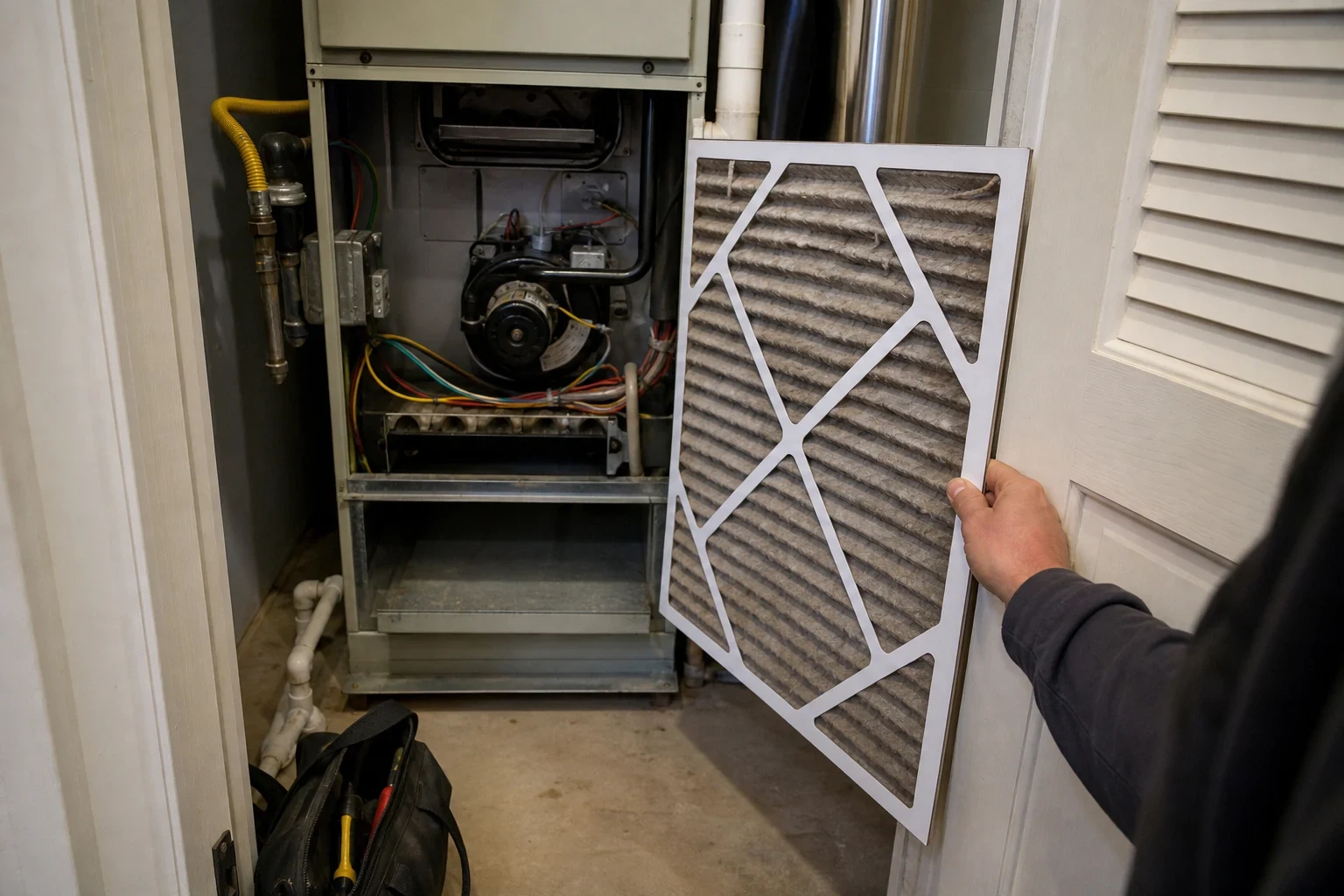
Rinse the washable filters in each head every month or two during heavy use, and keep snow and debris clear of the outdoor unit. A yearly professional cleaning of the indoor coil and blower wheel prevents mold buildup and weak airflow. Our Maintenance Plans cover that visit.
Do rebates or tax credits apply?
Many ductless systems count as heat pumps for incentive purposes. We give you help claiming Avista rebates and federal tax credits on heat pumps. During the estimate, we point out which models qualify and walk you through the paperwork each program asks for.
Should I get a mini-split or a ducted heat pump?
If your home already has ducts in good shape, a ducted system on our Heat Pumps page may cost less per room. If there are no ducts, or you only need to fix a few rooms, ductless is usually the better fit.
Talk through your rooms with us
Tell us which rooms are uncomfortable and how you heat now. We will set up a free estimate, and the same person stays with your job through cleanup.