ServicesHeat Pumps
Heat Pumps in Ritzville
We install, replace and repair heat pumps that heat your home through a hard January and cool it in July. One person handles your job from the first call to the final walkthrough, and you get a written quote before any work begins.
One system for heating and cooling
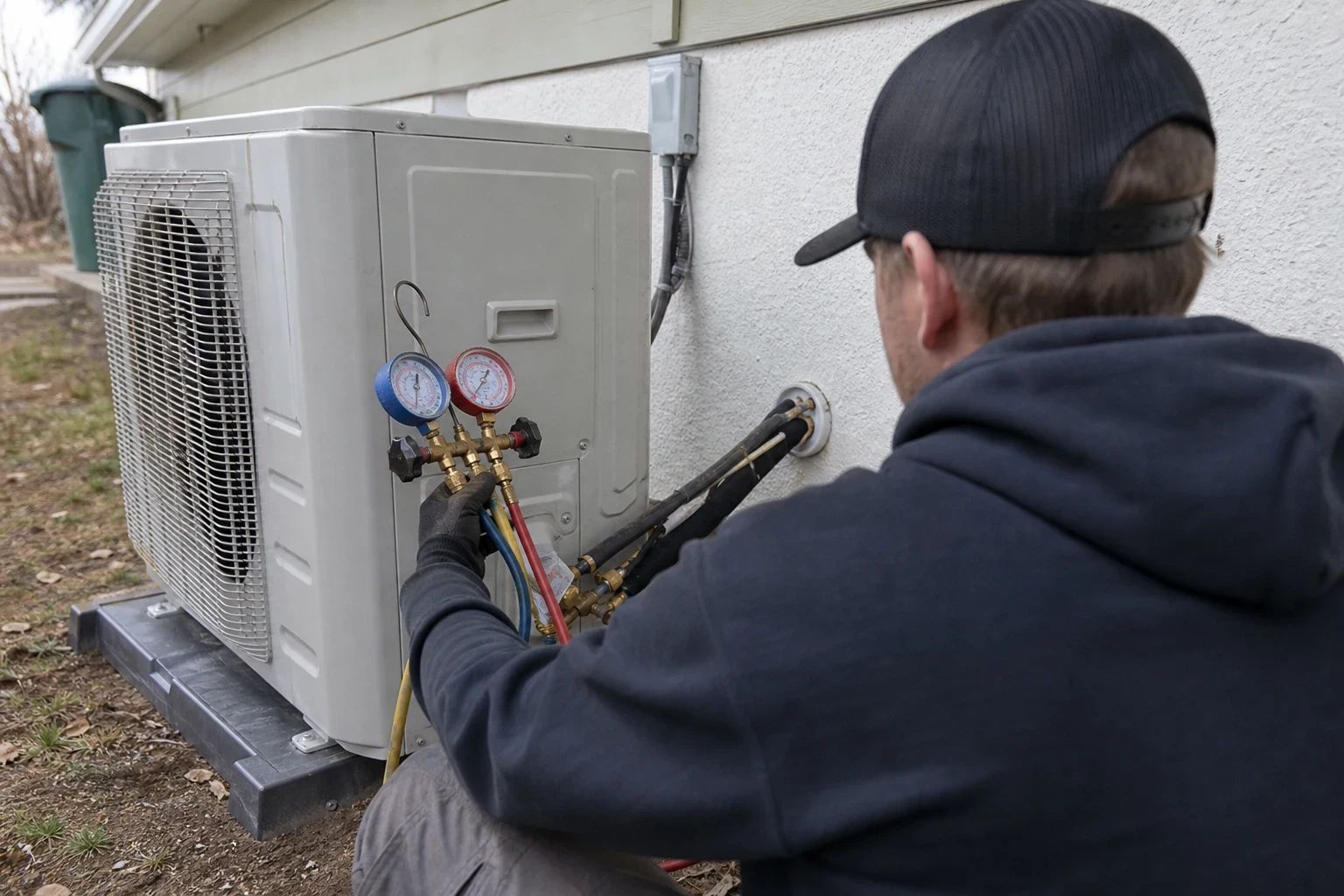
A heat pump moves heat instead of making it. In summer it pulls heat out of your home like an air conditioner. In winter a reversing valve flips the refrigerant flow, and the outdoor coil pulls heat from cold outside air and delivers it indoors. Because it moves heat rather than burning fuel or running resistance coils, a heat pump can deliver two to three units of heat for every unit of electricity it uses.
Older heat pumps lost most of their output in single-digit weather, which is why many people here still doubt them. Current cold-climate models use variable-speed inverter compressors that keep producing useful heat well below freezing. We size each system to your home's actual heat loss and plan for backup heat, either electric strips or your existing furnace in a dual-fuel setup, so the coldest nights are covered.
You talk to the same person from the estimate through cleanup. That person answers your questions, schedules the crew and the electrician, and walks you through the thermostat when the job is done.
What our heat pump work covers
- Heat loss sizing
- We measure rooms, check insulation and windows, and run a load calculation instead of matching the old unit's tonnage. An oversized heat pump short-cycles, dehumidifies poorly and wears out its compressor early.
- Cold-climate equipment choice
- We compare models by their rated output at 5°F, not just their efficiency label. That number tells you how much backup heat your home will actually lean on in winter.
- Installation and startup
- New line set or a flushed and pressure-tested existing one, a level pad or wall brackets that keep the outdoor unit above drifting snow, a vacuum pulled to proper microns, and refrigerant charge verified by superheat and subcooling.
- Heat pump repair
- Failed defrost boards, stuck reversing valves, weak capacitors, refrigerant leaks at flare fittings, and iced coils. We find the cause before replacing parts.
- Rebate and tax credit paperwork
- Qualifying heat pumps can earn an Avista rebate and a federal tax credit. We choose equipment that meets each program's efficiency rules, then assist with the claims by supplying the model numbers, invoices and documentation they require.
Signs your heat pump needs attention, or it's time for one
Ice that won't clear
Light frost that melts off during a defrost cycle is normal. A coil encased in solid ice points to a failed defrost sensor or board, low refrigerant, or a stuck outdoor fan.
Backup heat runs constantly
If the aux or emergency heat light stays on and your electric bill jumps, the heat pump itself is not carrying the load. Common causes are a low charge, a bad reversing valve or a thermostat wired wrong.
Lukewarm air in heat mode
Supply air from a working heat pump often feels cooler than a furnace's, but it should still be noticeably warm. Air near room temperature means the compressor or valve isn't doing its job.
An aging AC with a working furnace
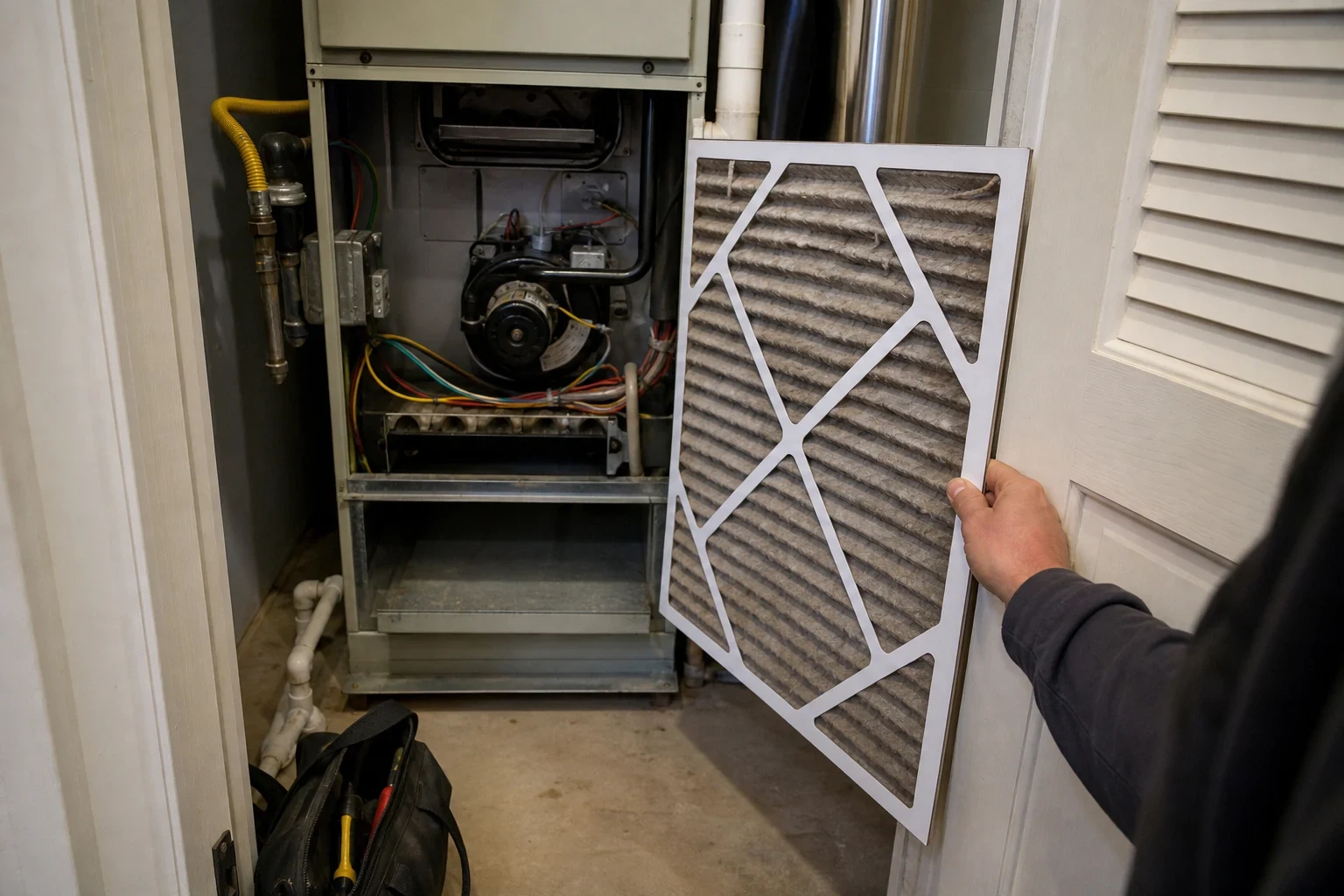
If your air conditioner is near the end of its life, replacing it with a heat pump costs little more and gives you a second heat source. Paired with the furnace, it handles mild weather and lets the furnace take over in deep cold.
Loud whooshing or grinding
A brief whoosh during defrost is normal. Grinding, rattling or a compressor that hums but won't start needs a technician before it damages itself.
How a heat pump job runs
- 1
Phone call and visit
You call, and the person who answers stays your contact for the whole job. Estimates are free on installations and replacements, and we schedule a visit to see your home and current equipment.
- 2
Written quote and options
You get a written quote before any work begins, with equipment, backup heat, electrical work and permits listed separately. We explain why we recommend a given size and model.
- 3
Permits and install day
We pull the required permits. Most replacements take one to two days: setting the outdoor unit, mounting the air handler or coil, running the line set and wiring, and protecting floors along the way.
- 4
Startup and walkthrough
We verify charge, test heating, cooling and defrost, set the thermostat's backup heat lockout, and show you what normal operation looks and sounds like. Then we clean up and haul away the old equipment.
What moves the price of a heat pump
Two homes of the same size can need very different systems. The price comes from the equipment's cold-weather capacity, what your home already has, and how much electrical and setup work the install needs. Rebates and tax credits can offset part of it, and we include the ones you qualify for when we go over your quote.
- Capacity and cold rating
- Larger tonnage and models that hold full output at low temperatures cost more up front but rely less on backup heat.
- Electrical service
- A heat pump with heat strips may need a new breaker, heavier wiring or, in older homes, a panel upgrade.
- Backup heat setup
- Electric strips are simpler to install. A dual-fuel setup with your existing furnace needs compatible controls and a matched coil.
- Line set and placement
- Reusing a sound line set saves money. A long run, a new wall penetration or a raised stand above snow adds labor and material.
- Permits and removal
- Permit fees and disposal of the old unit and its refrigerant are part of every replacement and are listed on your quote.
Heat pump questions we hear most
Something not covered here? (509) 210-8386
Will a heat pump really keep my home warm in January?
A properly sized cold-climate model will carry most of the load down into single digits. Below its balance point, backup heat from electric strips or your furnace takes over automatically. We size the system so that backup runs only on the coldest stretches, not all winter.
Can I keep my gas or propane furnace?
Yes. In a dual-fuel setup the heat pump replaces your air conditioner and handles heating in mild weather, and the furnace takes over below a temperature we set on the thermostat. It's a common choice when the furnace still has years left.
Why does my heat pump blow steam in winter?
That's the defrost cycle. The unit briefly reverses to warm the outdoor coil and melt frost, and the meltwater gives off vapor. It should last a few minutes and then stop. If the coil stays iced over, call us for a repair visit.
What if my home has no ducts?
A ducted heat pump needs an existing duct system in good shape. If you don't have one, ductless mini-splits are usually the better fit, and we can walk you through that option on the same call.
How do the rebates work?
Avista offers rebates on qualifying heat pumps, and federal tax credits apply to qualifying equipment as well. Each program has efficiency requirements, so we confirm eligibility when choosing the model. We handle the rebate documentation with you, and you file the tax credit with your return.
Talk through your heat pump options
Tell us about your home and current system, and we'll set up a visit and a written quote. Emergency HVAC repair is available around the clock, 24/7, if your heat pump quits on a freezing night, and we never add a charge for emergency or after-hours calls.