ServicesMaintenance Plans
HVAC Maintenance Plans in Ritzville
A maintenance plan puts your furnace and air conditioner on a schedule: a cooling tune-up before summer, a heating tune-up before winter, and one person at our office who keeps track of your equipment, its history and what it needs next.
What a Maintenance Plan Does for Your Equipment
Most no-heat and no-cool calls start as something small. A run capacitor drifts below its rated microfarads, a flame sensor builds up oxide, or a condensate line slowly fills with algae. None of that announces itself until the system shuts down on the hottest or coldest day of the year. A plan gets a technician in front of those parts twice a year, while a fix is still simple.
Our plans start at $14.99 a month. For that, your tune-ups are covered, repairs come at a discount and your visits get booked ahead of non-members. When you join, one person at our company becomes your contact. That person books your visits, keeps the readings from each tune-up on file and tells you plainly when a part is wearing out, so you are not explaining your system to someone new every season.
What Each Visit Covers
Spring cooling tune-up
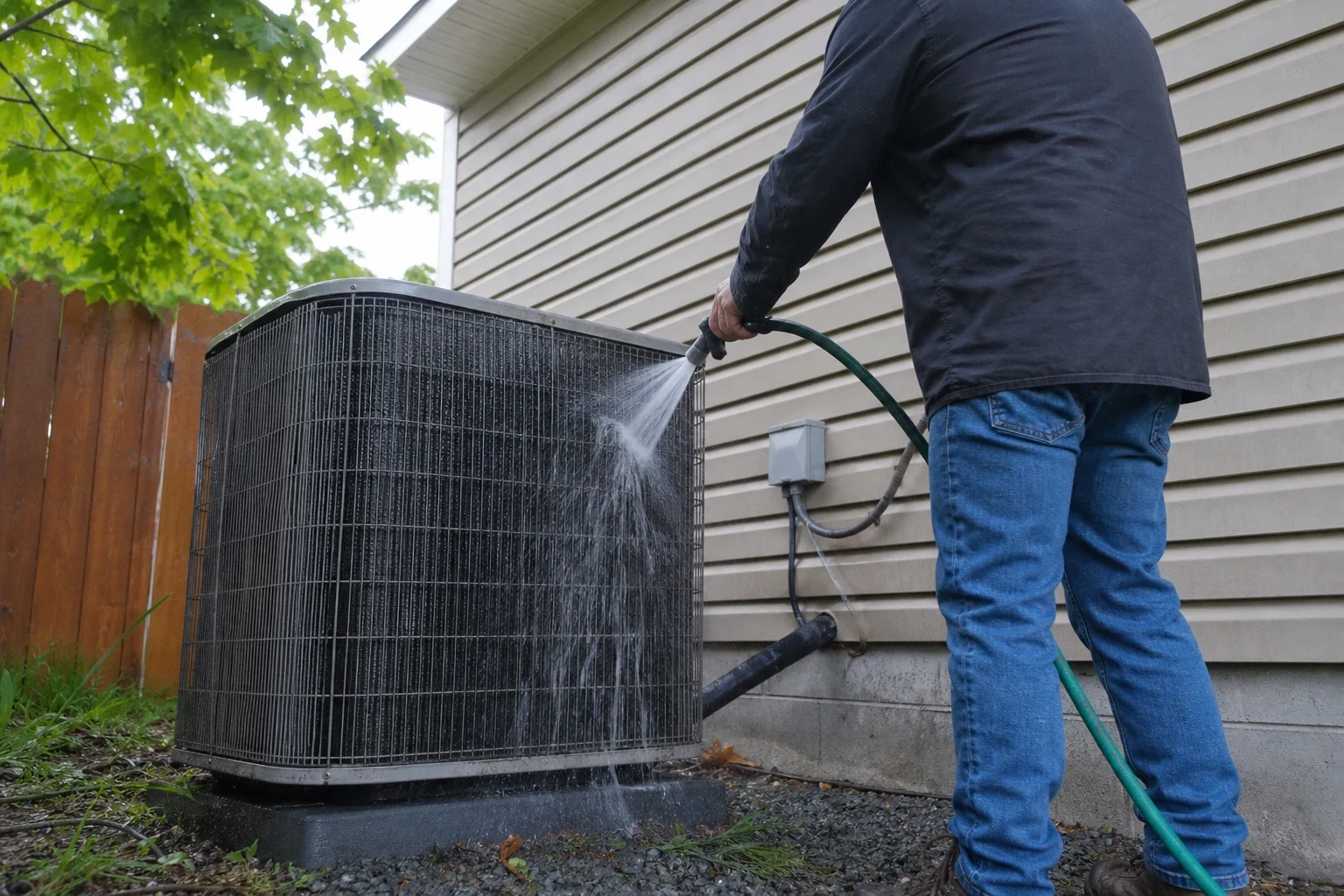
We clean the condenser coil, check refrigerant performance by measuring superheat and subcooling, and test the run capacitor and contactor. Harvest-season dust packs into condenser fins and raises head pressure, so the coil cleaning matters more here than the checklist makes it look.
Fall heating tune-up
We inspect the burners, clean the flame sensor, test the igniter and check the inducer motor and pressure switch. We measure gas pressure and temperature rise across the furnace so we know it is firing within the manufacturer's range.
Safety checks
We look at the heat exchanger for cracks or rust, confirm the flue is drafting properly and test for carbon monoxide at the furnace. A cracked heat exchanger is the one finding we will always point out in person and show you.
Airflow and drainage
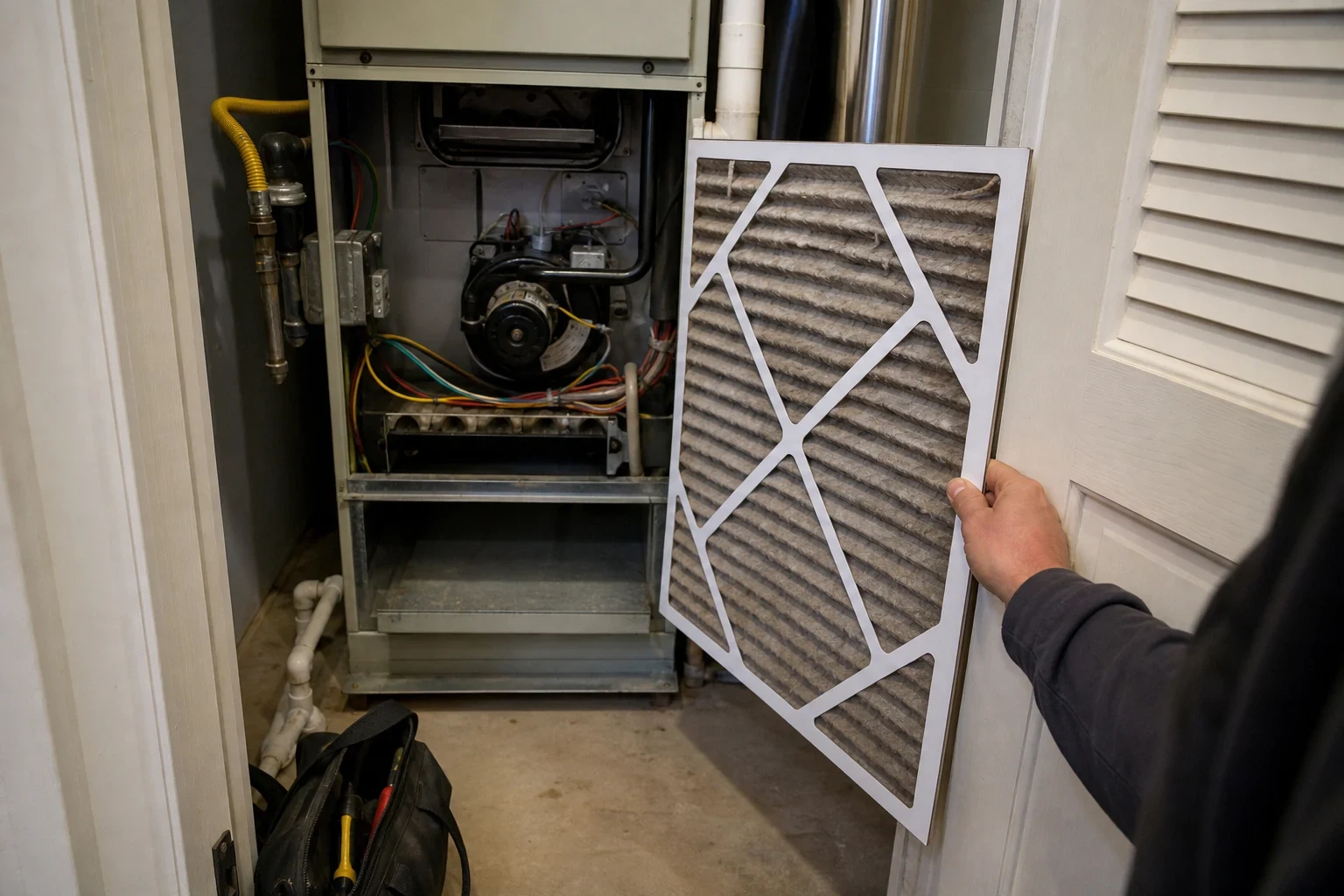
We check the blower wheel for buildup, look at your filter and clear the condensate drain and trap. A clogged drain is one of the most common reasons a high-efficiency furnace or an AC shuts itself off.
Written findings
After every visit you get the readings we took and a short list of anything that needs attention, ranked by how urgent it is. If nothing is wrong, we say so.
Signs Your System Is Overdue for Maintenance
- The outdoor unit hums but the fan does not spin
- That usually points to a weak capacitor. Caught at a tune-up, it is a quick part swap instead of a burned-out fan motor.
- The furnace lights, then shuts off
- A furnace that ignites and drops out within seconds is often reading a dirty flame sensor. Cleaning it is routine maintenance, not a repair call.
- Energy bills creeping up
- Dirty coils and a clogged blower wheel make the system run longer to move the same heat. The bill rises well before comfort drops.
- Water around the furnace or air handler
- A slow condensate leak means the drain line or trap is restricted. Left alone, it can trip a float switch or damage the floor.
- No tune-up in two or more years
- Even if everything seems fine, wear on bearings, contacts and igniters is happening. A baseline visit tells you where things stand.
How a Plan Works From Sign-Up On
- 1
Talk it through by phone
You tell us what equipment you have, roughly how old it is and any problems you have noticed. We explain the plan and answer questions before you commit to anything.
- 2
First visit sets the baseline
On the first tune-up we record model and serial numbers, refrigerant type, filter size and the key readings. That record is what lets us spot a part trending toward failure later.
- 3
Your contact schedules the season
The same person reaches out ahead of spring and fall to book your visits at a time that works for you. You do not have to remember.
- 4
Repairs only with your approval
If we find a worn part, you get a written quote before any work begins, with your plan discount applied. Nothing gets replaced without your say.
What Affects the Cost of Your Plan
The monthly plan covers the scheduled tune-ups themselves. What changes the total over a year is mostly the equipment you have and what the tune-ups turn up. We go over the options on the phone so you know what is covered before you sign up.
- Number of systems
- A home with one furnace and one AC needs two visits a year. Adding a heat pump, a second furnace or a ductless mini-split adds equipment to check.
- Type of equipment
- Heat pumps run in both seasons and get a fuller check of the reversing valve and defrost controls. Older furnaces with standing pilots need different attention than modern sealed-combustion units.
- Parts found worn
- Capacitors, igniters and contactors are replacement items. Your plan lowers the repair cost through the member discount, but parts themselves are quoted separately in writing.
- Age and condition
- Equipment that has gone years without service may need a deeper first cleaning of coils and blower components before it is back to a normal baseline.
Maintenance Plan Questions
- How often will you come out?
- Twice a year. We service the air conditioner or heat pump in spring before the heat arrives and the furnace in fall before the first hard freeze. Heat pumps get attention at both visits because they work year-round.
- Do I still pay for repairs on a plan?
- Yes, repairs and parts are separate from the tune-ups. Plan members get repair discounts and priority scheduling, and you always see a written quote before any work begins.
- What if my system breaks down between visits?
- Call us any hour of the day or night. We handle emergency HVAC repair around the clock, and a night or weekend visit costs no more than a weekday one because we do not charge extra for it. Since your equipment is already on file, the technician shows up knowing your system.
- Is a tune-up worth it on a newer system?
- Yes. Many manufacturer warranties expect documented annual service, and a new system can still have a low refrigerant charge from installation or a drain line that clogs in its first year. Early visits also set the baseline readings we compare against later.
- Who do I talk to if I have a question about my plan?
- The same person who set up your plan. They book your tune-ups, keep your service history and can explain any reading or recommendation on your report.
Put Your Furnace and AC on a Schedule
Tell us what equipment you have and we will explain how the plan works for your home. One person handles it from the first visit on.