ServicesFurnace Repair
Furnace Repair in Ritzville, WA
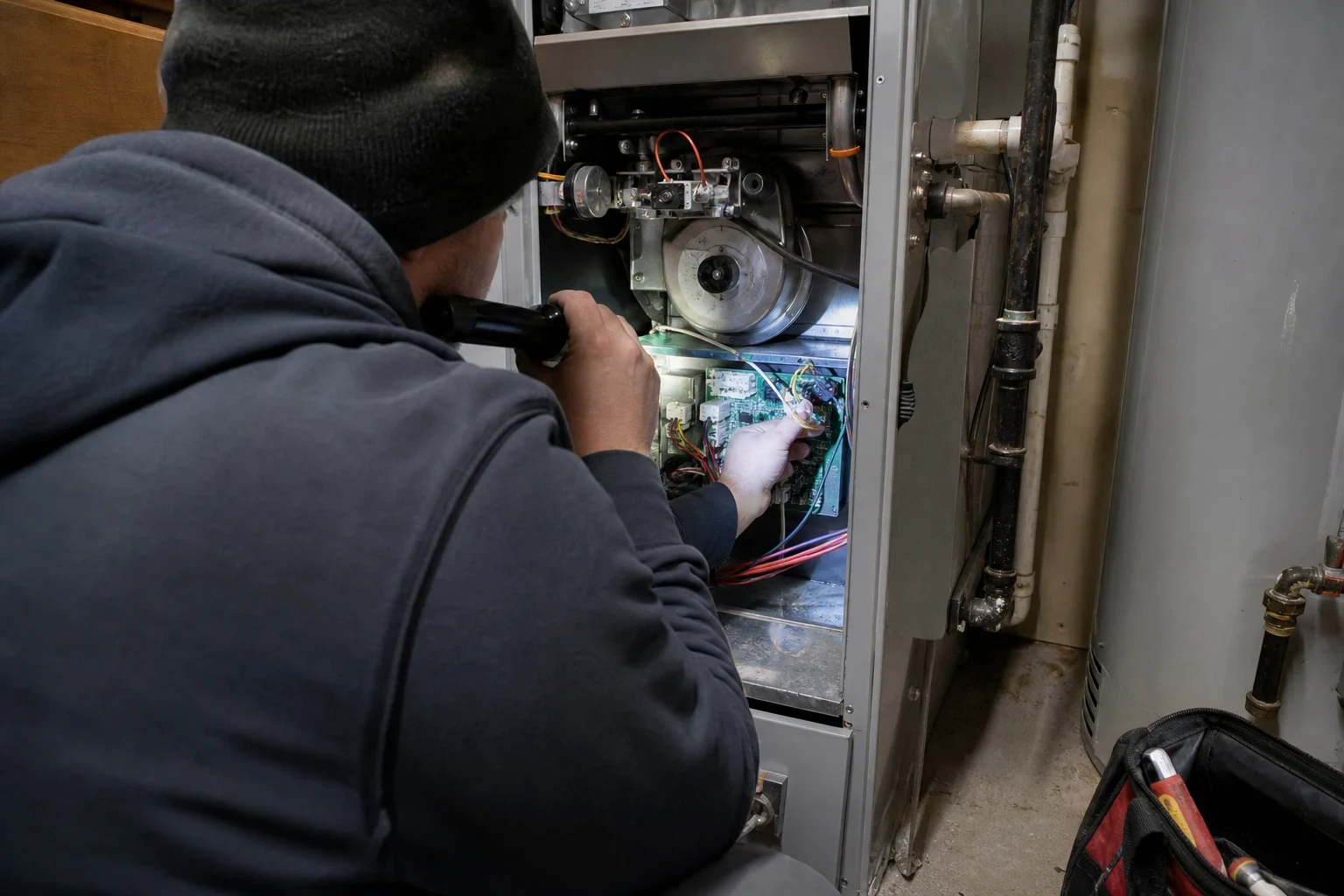
When your furnace short-cycles, blows cold air or won't light, we test the sequence of operation and find the exact part that failed. You get a written quote before any work begins, and one person stays with your job from the first call to cleanup.
What Furnace Repair Covers and When It Makes Sense
A gas furnace lights in a fixed order. The thermostat calls for heat, the inducer motor clears the flue, a pressure switch confirms draft, the igniter glows, the gas valve opens and the flame sensor proves the burners are lit. A fault at any step stops the sequence. Most no-heat calls come down to one part in that chain, and replacing that part is usually far cheaper than replacing the furnace.
Repair is the right call when the cabinet, heat exchanger and blower are sound and the failure is a component such as an igniter, sensor, capacitor or control board. If we find a cracked heat exchanger or a unit that keeps losing parts, we say so plainly and explain the numbers on furnace installation instead.
The person who answers your call is the person who schedules the visit, reviews what the technician found with you and confirms the work is finished. You do not repeat your story to three different people.
What We Check and Fix
- 01
Ignition and flame proving
We test the hot surface igniter for resistance and clean or replace the flame sensor. A sensor coated in oxide reads too few microamps, so the board shuts the gas off a few seconds after the burners light.
- 02
Draft and safety switches
We check the inducer motor, the pressure switch and its tubing, and the high-limit and rollout switches. These switches trip for a reason, so we look for the cause, such as a blocked flue or a restricted filter, instead of just resetting them.
- 03
Blower and airflow
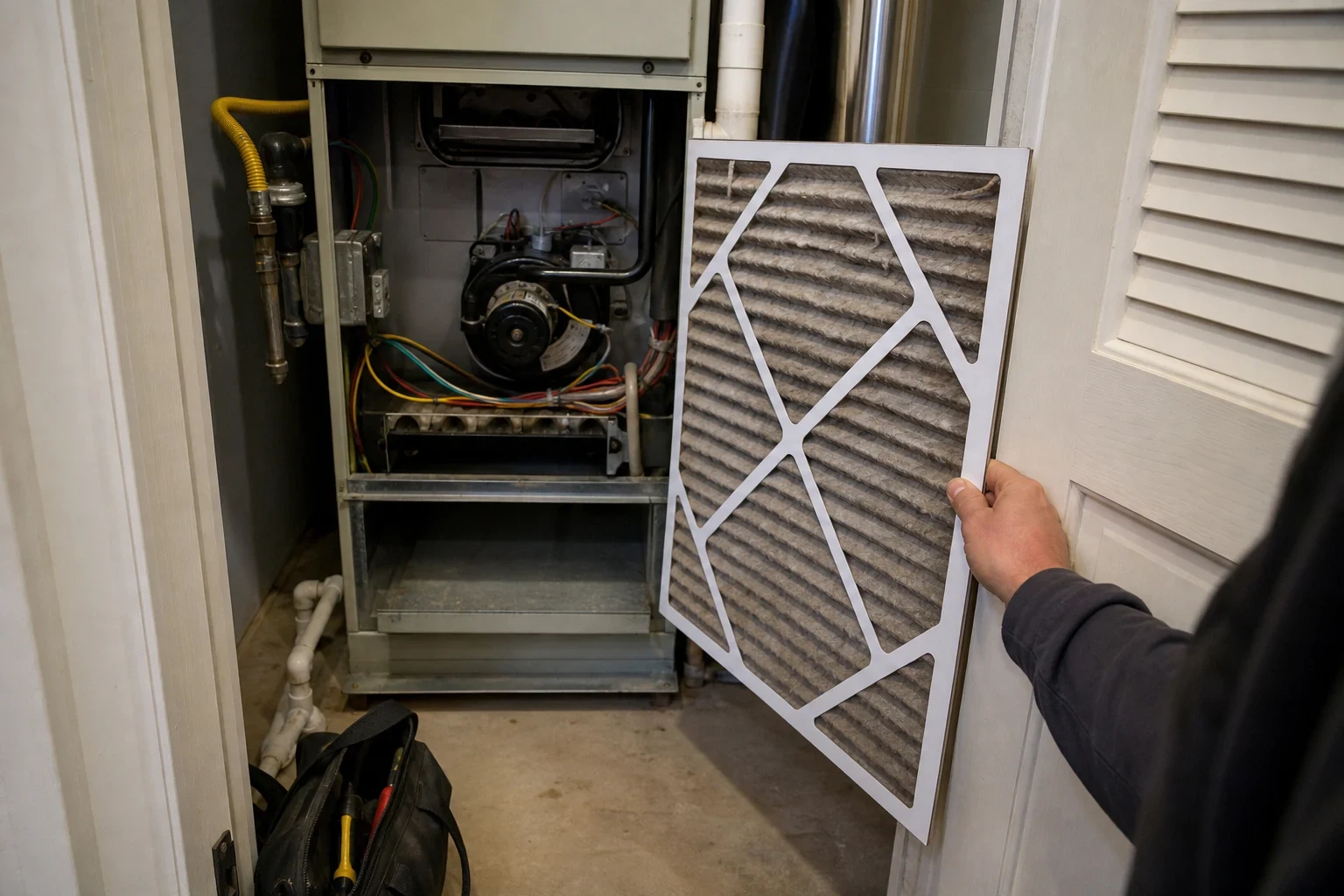
We test the blower motor and run capacitor and inspect the wheel for dust buildup. A weak capacitor makes the motor hum, overheat and trip the limit switch.
- 04
Control board and gas valve
We read the board's fault codes, check voltage at the transformer and confirm the gas valve opens to the correct manifold pressure.
- 05
Combustion safety check
We inspect the heat exchanger and burners and test for carbon monoxide at the supply registers and near the appliance before we leave.
Questions about Furnace Repair?
Call(509) 210-8386Signs Your Furnace Needs Repair
Burners light, then shut off
This usually points to a dirty flame sensor or a weak ground. It is one of the most common and least expensive repairs we make.
Fan runs but the air is cold
The blower is working but the burners are not. Ignition, the gas supply or a tripped limit switch is the likely cause.
Short cycling
A furnace that starts and stops every few minutes is often overheating on a clogged filter or a failing blower, and it wears out parts quickly.
New noises
Squealing points to a bearing or belt, rattling to a loose panel or inducer wheel, and a loud bang at startup to delayed ignition from dirty burners.
Blinking light on the board
Most furnaces flash a code through a small window in the blower door. Write down the pattern before you call so we can narrow the cause.
Soot, odor or headaches
A yellow, lazy flame, soot near the burners or headaches in the house can mean poor combustion. Shut the furnace off and call us right away.
How a Repair Visit Runs
- 1
Your call
Tell us what the furnace is doing, any code you see and the age of the unit. We set the visit and you keep the same contact for the whole job. If you have no heat on a freezing night, our 24/7 emergency HVAC repair line is the same number.
- 2
Diagnosis
The technician walks the furnace through its full heating sequence with a meter and manometer and isolates the failed part. The diagnostic fee is credited toward the repair.
- 3
Written quote
You get a written quote before any work begins, showing the part, the labor and anything else we noticed, with a repair-or-replace opinion if the unit is near the end.
- 4
Repair and test
We install the part, run several full heating cycles and check temperature rise, draft and carbon monoxide. Then we clean up the work area and walk you through what was done.
What Moves the Cost of a Furnace Repair
Most of the price is the part itself plus the time to reach and replace it. Your written quote lists both, so you can see where the money goes before we start. There are no emergency or after-hours fees, so the clock does not change the price.
- Which part failed
- A flame sensor or capacitor is a small part. An inducer motor, blower motor or control board costs considerably more.
- Brand and part availability
- Universal igniters and switches are easy to source. Some boards and motors are brand-specific and may need to be ordered.
- Access
- A furnace in a tight crawlspace or a cramped closet takes longer to work on than one in an open basement.
- Condition of the system
- A long-neglected furnace may have a clogged filter, a dirty blower wheel or corroded wiring that caused the failure and needs attention too.
Furnace Repair Questions
What should I look at first when the heat quits?
Start at the thermostat: it should be in heat mode, and if it runs on batteries, swap them. Next, confirm the service switch beside the furnace is on, the breaker is set and the filter is not packed with dust. The blower door also has to sit fully closed, since a safety switch cuts power to the furnace when it is loose. If those all check out, the fault is inside the unit and it is time to phone us.
Is the diagnostic fee extra on top of the repair?
No. The diagnostic fee is credited toward the repair when you go ahead with it. You see the full amount on the written quote before any work begins.
Do you charge more for nights and weekends?
We have no emergency or after-hours fees. A no-heat call at night is quoted the same way as one during the day.
How do I know whether to repair or replace?
We look at the age of the furnace, the condition of the heat exchanger and how often it has needed parts. If a repair is sensible, we recommend it. If the heat exchanger is cracked or repairs keep piling up, we explain why replacement is worth considering and you decide.
Is a cracked heat exchanger dangerous?
It can be. A crack can let combustion gases, including carbon monoxide, mix with the air circulating through your home. If we find one, we show you where it is and recommend the furnace stay off until it is replaced.
Find Out Which Part Failed
Describe the symptoms and any blink code you see, and one person will coordinate the diagnosis, the repair and the cleanup while keeping you updated. The written quote comes before any work begins.